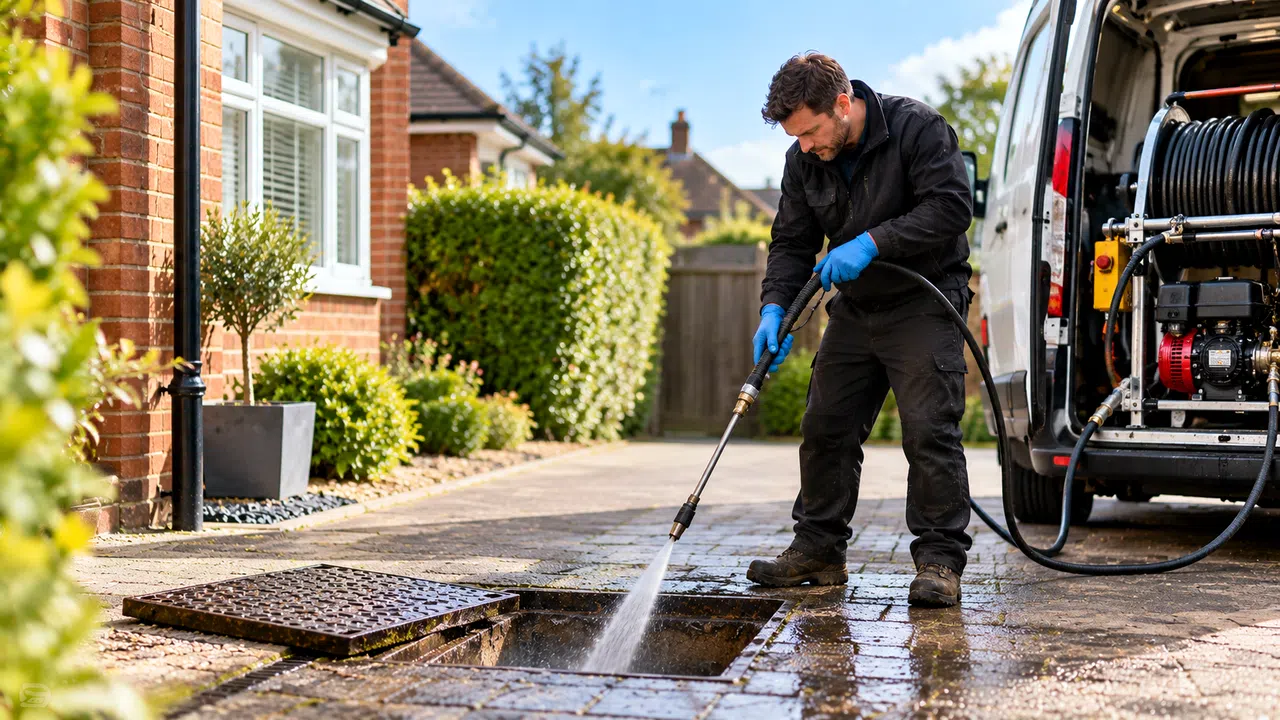
Illustrative image of the relevant drainage feature or investigation.
The short answer
High-pressure water jetting is an effective method of clearing many drains, but excessive pressure or an unsuitable nozzle can worsen an already fragile pipe or defective joint. Sound pipes are generally more resilient than badly cracked or deteriorated ones.
Match the remedy to the defect
A repair ought to correct an identified problem, not just the symptom that brought the contractor out. Cleaning, localised repair, lining and replacement each have a place, but none is right for every drain. The shape, fall, access and condition of the host pipe can rule methods in or out.
What matters in this situation
A pre-existing fault may first become obvious during clearance; that does not automatically mean jetting caused it. Ask about pipe age, material, access points and the pressure appropriate to its condition. Older clay pipes may have open joints or previous patch repairs.
What high-pressure water actually does
Jetting sends water through a hose and nozzle to dislodge grease, silt and other obstructions. When operated by a competent contractor with suitable pressure, flow and nozzle selection, it is a common drain-clearing method. But a pipe already fractured, badly jointed or weakened can be vulnerable to aggressive cleaning. Exposed flexible joints and fragile clayware demand care, and a powerful jet is not a substitute for diagnosis of a structural blockage.
Before the contractor starts
Tell the contractor about any previous CCTV survey, known collapse, recurring root ingress or historic damage. Ask whether they intend to inspect first and how they will control the risk of backing sewage up into the house. Some blockages may require removal by a different method or access from another chamber. Never attempt to operate commercial jetting equipment yourself: the water jet and contaminated spray can cause serious injury.
After a difficult clearance
If the contractor finds fragments of pipe, recurring obstruction at one point or signs of an open joint, ask for a condition survey rather than repeated jetting. Record whether flow was restored and whether the symptoms recur with heavy use. A camera check after clearance is often more informative than one conducted through murky water and debris. It may establish that repair, rather than another clean, is the appropriate next step.
The sensible next step
For repeated obstructions or suspected structural failure, a camera survey before or after clearance can help establish the condition. A contractor should explain why the chosen cleaning method is suitable and whether alternative techniques are safer.
Before authorising expensive work
Obtain a written scope, evidence of the defect and what happens if additional damage is discovered. Ask whether reinstatement and a post-repair camera check are included. A second opinion can be sensible where the proposed work is extensive.
For guidance on agreeing work with a contractor see Citizens Advice on home improvement work.
Why post-cleaning inspection can be useful
A camera inspection after jetting can show whether a stubborn obstruction has concealed a structural fault. For example, clearing roots from a clay joint may reveal a displacement that explains why waste was being caught. Fragments of pipe material recovered during cleaning can also be important evidence. If the line is in reasonable condition and the obstruction was a one-off deposit, further work may not be needed. But if every visit ends with the same complaint, the operator should consider whether a different diagnosis is required. Ask what the cleaning equipment encountered and whether it reached the downstream chamber. A careful contractor will not claim that jetting has permanently “repaired” a broken joint simply because wastewater is flowing again. Cleaning and structural restoration should be clearly distinguished in the invoice.
Need a local drainage specialist?
If investigation or repairs are needed, you can use MyJobQuote to request contact from local drainage tradespeople.
Get quotes from local drainage specialists ↗