Illustrative image of the relevant drainage feature or investigation.
The short answer
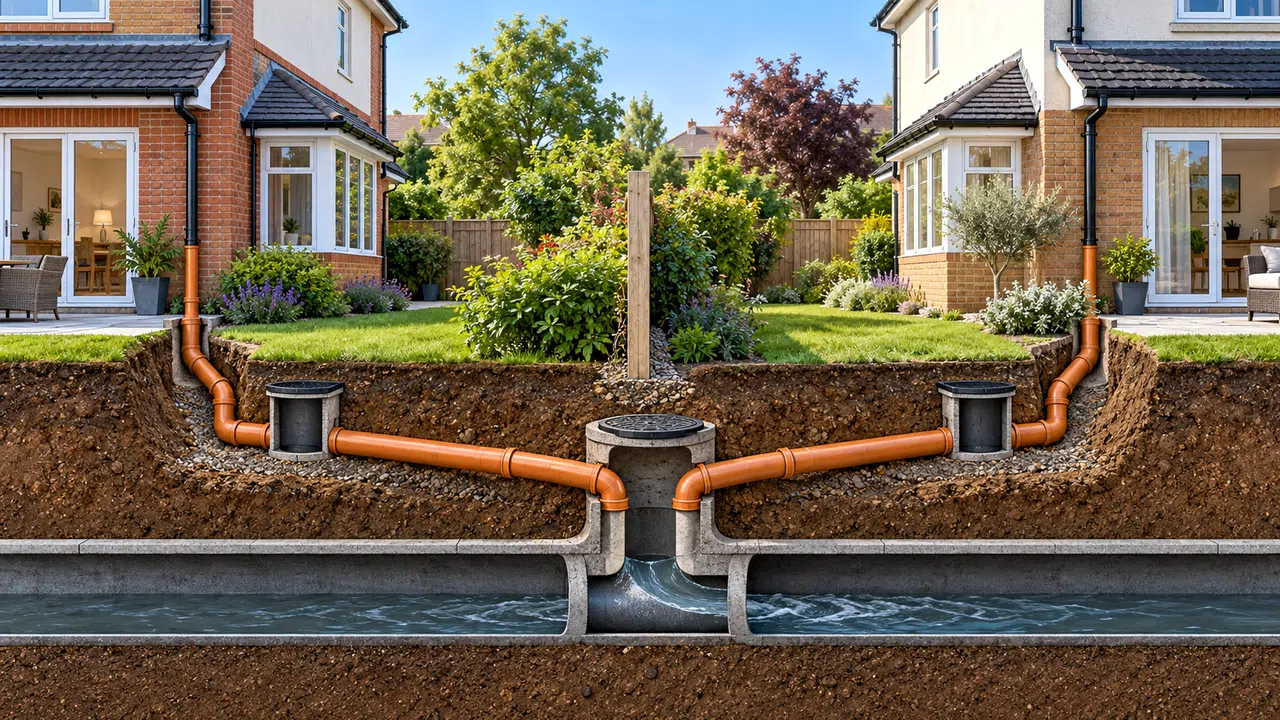
Neighbouring properties may share a drainage run, or one property’s pipe may cross another’s land. A blockage downstream can therefore affect toilets or gullies well away from its physical location. Not every drain visible in a neighbour’s garden belongs to that neighbour.
Check the responsible organisation
Private drainage arrangements can be difficult to establish from surface inspection alone. In England and Wales, sewerage undertakers maintain many formerly private shared sewers and lateral drains. Different arrangements apply elsewhere in the UK, and site-specific exceptions are possible.
What matters in this situation
Establish which properties are affected and whether the problem lies before or after the point where flows join. Drainage plans and water-company records may help, but old drawings can be incomplete. A camera survey with tracing can clarify the actual route.
How a neighbouring fault can affect your house
Pipes may join beneath gardens or driveways before reaching a larger sewer. A partial blockage downstream of that junction can cause wastewater to back up through the lowest available outlet, sometimes in a different property from the one where the obstruction formed. A defective neighbour’s private branch might also leak into adjoining ground. However, wet soil or a sewage smell at a boundary does not identify the owner or cause of the problem; other drains, rainwater routes and ground conditions must be considered.
Practical evidence before approaching a neighbour
Record exactly which fixtures back up, when it happens and whether heavy rain changes the symptoms. If possible, establish the path of the pipe through a competent drain surveyor rather than assuming it follows the fence line. Ask neighbours whether they have noticed similar problems without suggesting blame. Avoid entering another property or lifting another person’s chambers without permission. If sewage is escaping, report the public health concern promptly and contact the relevant sewerage undertaker to check whether the run is public.
Ownership and resolving disagreements
In England and Wales, a formerly private shared sewer connected to the public network may now be maintained by the sewerage company, even under private land. In Scotland, private shared drainage can involve joint owners; in Northern Ireland, a private sewer may remain jointly the responsibility of the properties it serves. Title documents, adoption records and sewer maps can all help. If private remedial work crosses the boundary, agree access, reinstatement and responsibility in writing. Serious disputes may require independent legal advice rather than competing contractor opinions.
The sensible next step
Where a shared public sewer or lateral drain is involved, the sewerage undertaker may be responsible. Avoid digging on adjoining land or assuming you can require a neighbour to pay without confirming ownership and legal responsibility.
Evidence before paying
Ask the sewerage company about the status of the affected section and keep its response. Where maps are inconclusive, tracing and inspections may help establish the route. Avoid commissioning major private works until responsibility has been checked.
For further information, check the water company serving the property and Ofwat guidance on responsibilities for household pipes.
Official guidance for different parts of the UK: Ofwat: public and private sewers; Northern Ireland: sewerage services.
When evidence points across the boundary
A pattern is often more informative than a single complaint. For example, if a downstairs WC backs up only when the neighbour empties a bath, that may indicate a shared restriction, but the pipe layout still needs establishing. If a paved area remains damp, there may be a leaking water supply, a rainwater outlet or a drainage defect; the boundary itself proves nothing. Keep dates, photographs and details of which outlets were in use. Where the pipe crosses private land, agree any inspection access in advance and avoid disturbing paving based solely on suspicion. If a defect is confirmed, consider whether one properly specified repair can resolve the issue without unnecessary work on both properties. Make the written scope clear about reinstatement and responsibility for any accidental damage.
Need a local drainage specialist?
If investigation or repairs are needed, you can use MyJobQuote to request contact from local drainage tradespeople.
Get quotes from local drainage specialists ↗