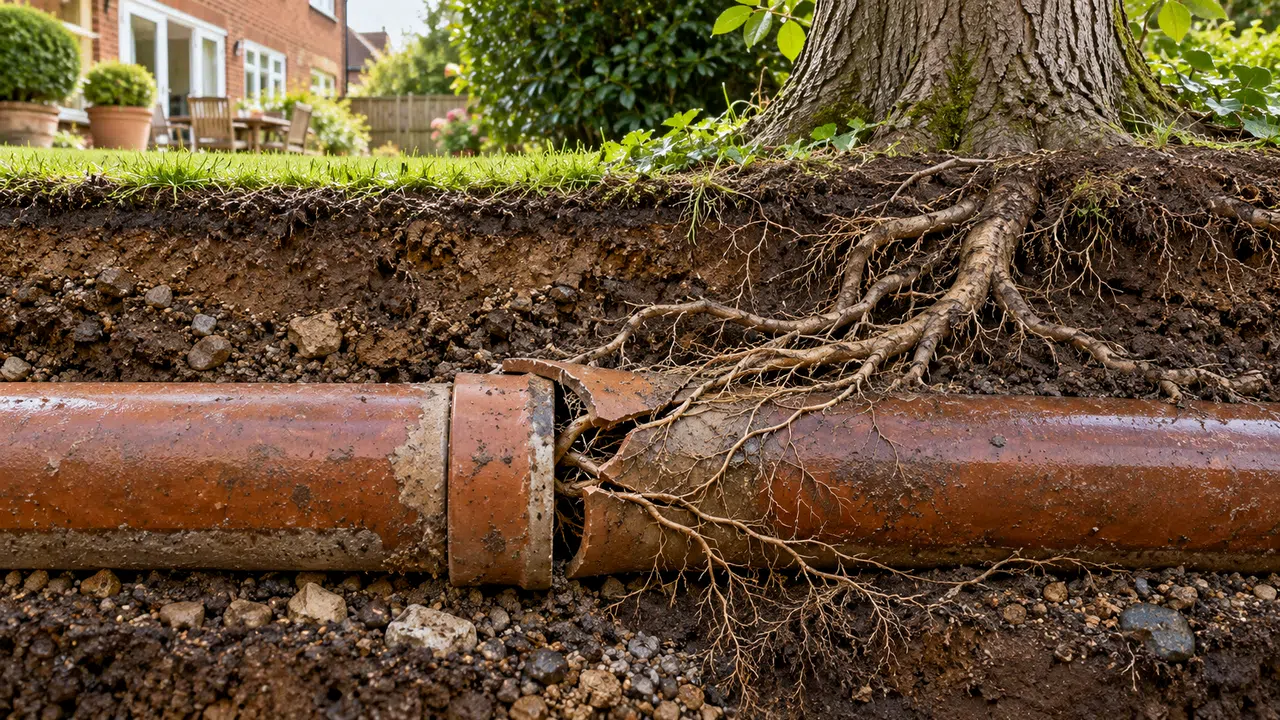
Illustrative image of the relevant drainage feature or investigation.
The short answer
Rats can sometimes travel along sewers and exploit damaged pipework, open joints or faulty connections. Seeing a rat near a gully is not proof that an underground drain is broken; it may have arrived across the surface.
Work out where the water originates
Surface flooding, wastewater surcharge, groundwater and ordinary rainwater runoff can look similar at first. The timing, smell, affected fittings and position relative to gullies or chambers help distinguish them. The right remedy depends on identifying the source.
What matters in this situation
Evidence is stronger when rat activity coincides with a particular chamber, opening or pipe route. A drainage survey may reveal openings but should be interpreted alongside a pest inspection. Traps and poison alone do not correct a structural entry route.
How rodents exploit drainage defects
Rats can travel through sewer networks and may gain access to property voids through open joints, broken pipes or poorly sealed connections. However, signs of rodents inside a house do not prove they entered through the drains: gaps around service penetrations, air bricks and other openings may also be involved. An internal sewage smell, recurring drain blockage and pest evidence together justify examining underground connections.
Look for the route rather than guessing
A drainage specialist may use CCTV to inspect joints, branches and the connection between the house and sewer. Rodent activity does not make every small pipe defect a proven entry point. A pest-control professional can assess evidence inside the building, including droppings and access holes. Keep investigation records and avoid opening sewage chambers yourself. If a defective shared sewer is suspected, seek advice from the wastewater undertaker.
Repairs and prevention
A suitable pipe repair should close the defect while preserving drainage capacity and access. A rat flap or other one-way device may be proposed in some installations but is not a substitute for repairing a broken pipe, and it must be suitable for the drain configuration. Seal building entry points carefully without blocking ventilation or drainage. Coordinate drainage work and pest control so animals are not simply displaced into other parts of the building.
The sensible next step
Ask for the access point to be located and sealed appropriately, taking account of drain function and maintenance access. Use competent pest-control advice and never enter drains to search for animals.
Protect people and property first
Avoid contact with sewage and keep children and pets away from contaminated areas. Do not enter inspection chambers or lift unsafe covers. If a public sewer may be affected, tell the relevant sewerage undertaker; if buildings are at risk, seek appropriate urgent assistance.
For flooding and emergency information see GOV.UK flood information.
Separate the drain defect from the pest proofing
A CCTV survey might find an open connection beneath a kitchen, but it does not prove rats have entered through that exact point unless there is supporting evidence. A pest specialist can examine gnaw marks, droppings and routes through floor voids. Drainage repairs should close genuine defects and leave access points safe, while building gaps around pipes may also need sealing. Avoid obstructing the functioning drainage system with improvised barriers. Where a rat valve is suggested, ask how it will be maintained and whether it is compatible with the arrangement and flow. If the defective run is part of the public sewer, contact the undertaker about its responsibility. Treating only the animals without fixing a proven opening can allow the problem to recur; repairing an unseen pipe without checking other entry points can be equally ineffective.
Need a local drainage specialist?
If investigation or repairs are needed, you can use MyJobQuote to request contact from local drainage tradespeople.
Get quotes from local drainage specialists ↗