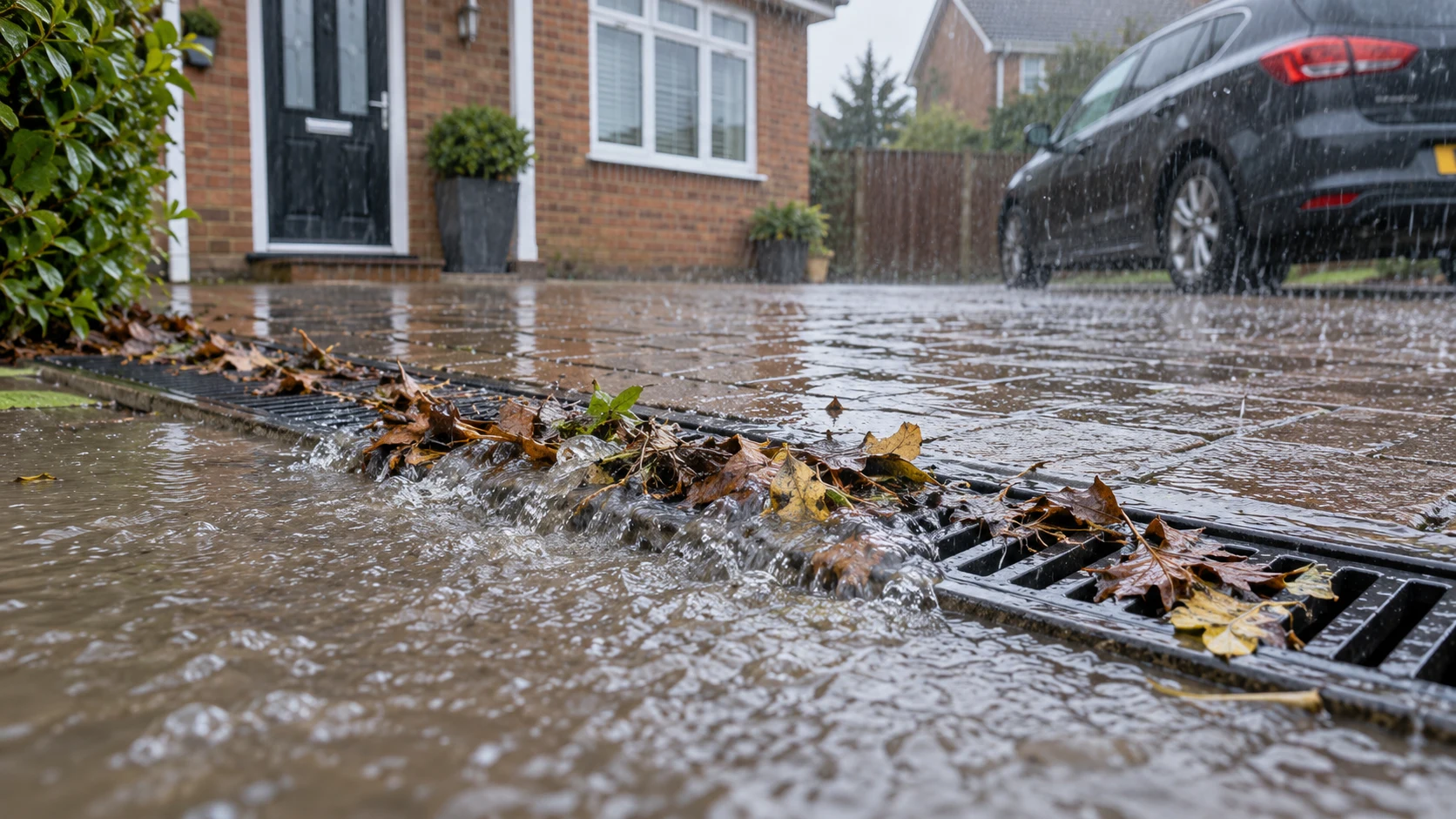
Illustrative photograph of a typical driveway channel drain overflowing during heavy rain.
The short answer
Driveway channels and gullies can overflow when leaves, silt or debris restrict their outlets, or when rainfall exceeds the capacity of the drainage arrangement. A blockage downstream may produce the same surface symptom.
Work out where the water originates
Surface flooding, wastewater surcharge, groundwater and ordinary rainwater runoff can look similar at first. The timing, smell, affected fittings and position relative to gullies or chambers help distinguish them. The right remedy depends on identifying the source.
What matters in this situation
Check whether water stands in the channel only during intense rain, remains long afterwards or backs up from another chamber. The direction of the driveway slope and the level of the house threshold are important.
Check what the channel is designed to collect
A driveway channel or gully may drain into a soakaway, surface-water pipe or combined sewer depending on the property. Leaves, grit and moss can clog the grating or trap, while a blocked or saturated soakaway can cause water to return during heavy rain. An outlet that works in light rain but fails in a downpour may be undersized for the paved area, particularly if extra hardstanding has been added.
Work through the route
Clear removable surface debris where safe, then observe whether water has an obvious escape path. A specialist can trace the pipe and check the outfall, chamber or soakaway. If the driveway drain connects to a shared or public network, responsibility may change beyond the private section. Do not assume that the problem is a broken underground pipe simply because the paving stays wet.
What a durable solution looks like
The design may need better falls, a correctly sized channel, an accessible silt trap or a different approved outfall. Discharging extra rainwater into a foul drain can be unlawful or unsuitable, so seek appropriate advice before changing connections. Where driveway surfacing is lifted, agree how the channel, bedding and finished levels will be reinstated.
The sensible next step
Surface debris can often be cleared safely, but opening a buried drain or modifying the outfall needs care. If paving has been altered, check whether the drainage remains suitable and whether water is being directed onto neighbouring land.
Protect people and property first
Avoid contact with sewage and keep children and pets away from contaminated areas. Do not enter inspection chambers or lift unsafe covers. If a public sewer may be affected, tell the relevant sewerage undertaker; if buildings are at risk, seek appropriate urgent assistance.
For flooding and emergency information see GOV.UK flood information.
Do not overlook silt traps and outlets
Driveway channels often collect sand, grit and leaves that need somewhere to settle before water enters a narrower pipe. If that material passes straight into the drain, blockages can recur despite cleaning the visible channel. Ask whether there is a removable trap and whether it is accessible for routine maintenance. A blocked outlet or saturated soakaway may produce exactly the same overflow during rain. If the driveway was recently resurfaced, check whether finished levels altered the direction of runoff. Simply fitting a deeper channel will not help if the discharge route cannot carry the water away. Any proposed new connection should be checked against drainage and building-control requirements. Keep a plan of the channel and outfall so future maintenance is straightforward.
Need a local drainage specialist?
If investigation or repairs are needed, you can use MyJobQuote to request contact from local drainage tradespeople.
Get quotes from local drainage specialists ↗