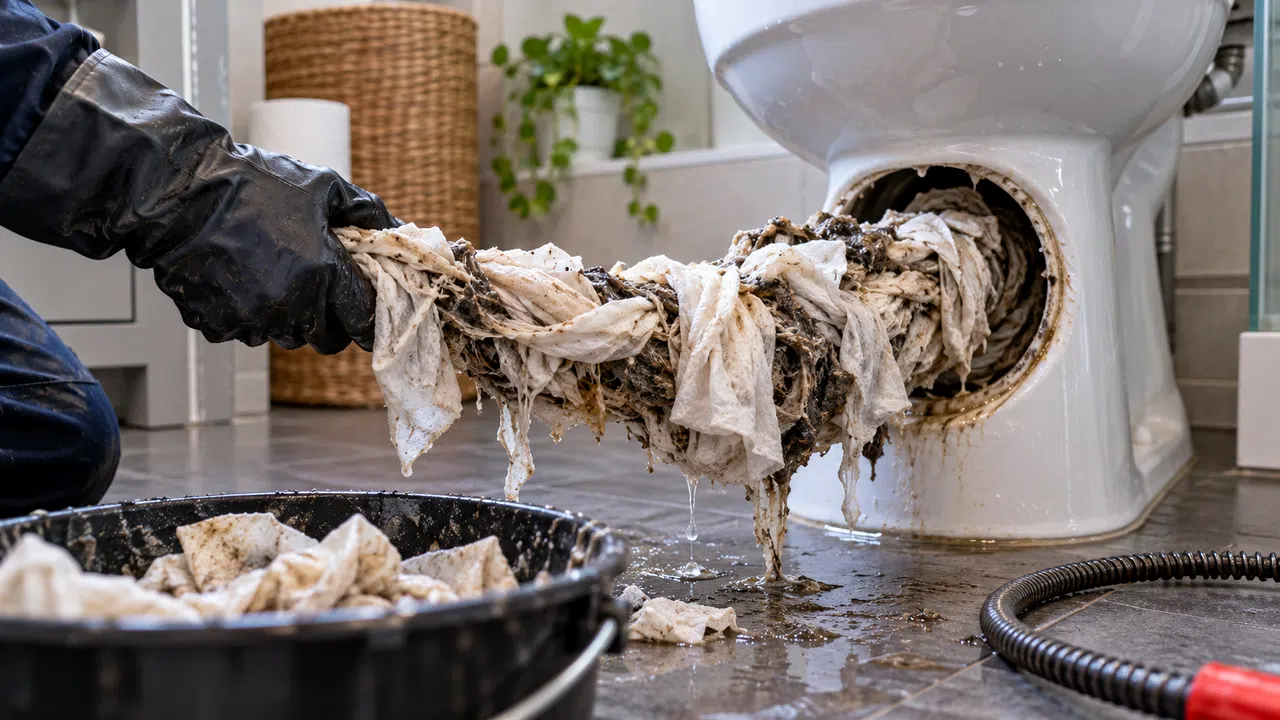
Illustrative image of the relevant drainage feature or investigation.
The short answer
A downstairs WC is often one of the lowest outlets in a house drainage system. A downstream restriction may therefore send wastewater back into it before an upstairs toilet shows a problem.
How to interpret the pattern
A single slow sink usually points to a local waste pipe or trap, while several fixtures failing together make a downstream restriction more plausible. The position of inspection chambers, whether foul water is backing up and the effect of rainfall all help narrow the possibilities.
What matters in this situation
If the bowl rises when another toilet flushes or the washing machine drains, suspect a shared downstream flow restriction. A problem affecting only one WC can instead be local to its trap or connection.
Why the lowest toilet is often first affected
The downstairs toilet may be connected to a common foul branch at a relatively low level. If the main outlet is restricted, wastewater can rise and emerge at that fixture even though its pan and immediate connection are unobstructed. If other toilets, the bath or shower also gurgle or drain slowly, suspect the downstream drainage route. Stop flushing repeatedly: it can make overflow and contamination worse.
Locate the restriction logically
A contractor may begin with the nearest accessible chamber and establish whether flow is reaching it from the house and leaving towards the sewer. If the chamber is empty but the toilet does not discharge, the problem may be upstream. If it is full, a downstream restriction is more likely. Tracing and CCTV may be useful when the blockage recurs or cannot be cleared fully. Do not assume a new toilet is needed.
Who should investigate
Check whether the obstruction is in a private drain, a shared sewer or an adopted lateral. In England and Wales many shared sewers are maintained by the undertaker, even on private land. Contact the wastewater company if several properties back up, particularly after rain. Protect the area from sewage exposure and ask any attending contractor to record which section was cleared and whether repair is recommended.
The sensible next step
Stop repeated flushing when the level is rising. If sewage backs up, keep the room out of use and arrange prompt assistance. Ask the engineer where the blockage was found rather than accepting that the WC itself is faulty.
When to call for help
If wastewater is rising inside the home, stop using the affected outlets where practical and seek prompt help. A one-off inconvenience with a straightforward cause may need only cleaning; repeated failure deserves an explanation and evidence of the location.
Your water or sewerage company can also advise about public-network problems; see Water UK.
Storm conditions change the diagnosis
A downstairs toilet that backs up after every flush suggests a different problem from one that overflows only during intense rain. The first may point to a restriction in the private foul run; the second can involve surcharging in a combined or public sewer. Check whether other homes in the street experienced trouble during the same storm and report that information to the wastewater undertaker. A camera may still reveal a private defect, but it will not on its own establish that a public sewer has adequate capacity during exceptional rainfall. Keep a record of incidents and avoid repeated flushing while the outlet is restricted. Once the water recedes, the investigation should identify the affected section and determine whether private repair or wider sewer action is appropriate.
Need a local drainage specialist?
If investigation or repairs are needed, you can use MyJobQuote to request contact from local drainage tradespeople.
Get quotes from local drainage specialists ↗