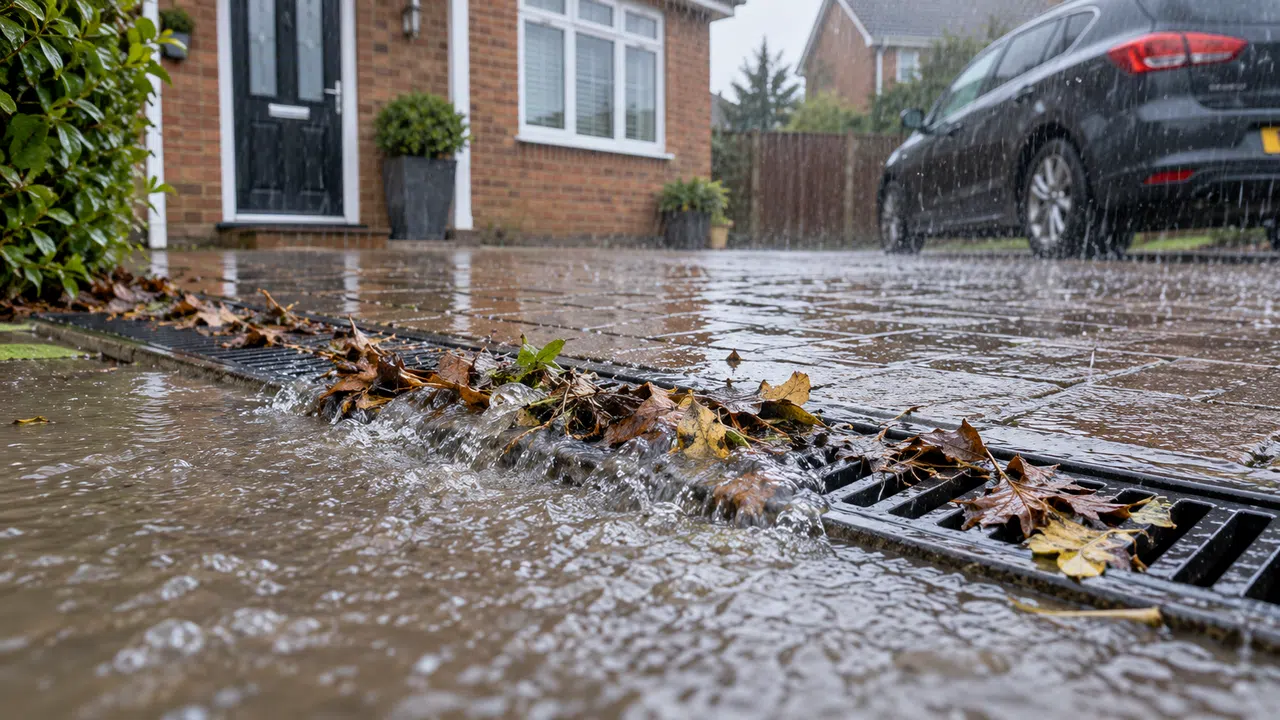
Illustrative image of the relevant drainage feature or investigation.
The short answer
An outside gully can overflow because its trap or outlet is clogged, because the downstream pipe is obstructed or because the wider sewer system is overloaded. The grate may appear clear even when the restriction is below it.
Work out where the water originates
Surface flooding, wastewater surcharge, groundwater and ordinary rainwater runoff can look similar at first. The timing, smell, affected fittings and position relative to gullies or chambers help distinguish them. The right remedy depends on identifying the source.
What matters in this situation
Notice whether the gully overflows when you empty a sink, when the toilet is flushed or only during heavy rainfall. These different triggers help identify whether the likely source is household wastewater or surface runoff.
Identify which outside drain is overflowing
A rainwater gully beneath a downpipe, a kitchen waste gully and a foul inspection chamber serve different purposes. Leaves can choke a rainwater gully; grease can build up in a waste branch; a chamber full of sewage may indicate a restriction farther downstream. Observe whether overflow happens when taps run, toilets flush or rain falls. Never lift a heavy chamber cover or reach into sewage to find out.
Why the nearest pipe may not be at fault
Water backs up to the first available opening upstream of a blockage, so the point of overflow may be some distance from the problem. If several homes are affected or the issue occurs in a shared run, the sewerage company may need to investigate. A local contractor can check private gullies, traps and branches, and may use CCTV after clearing to locate roots, cracks or offsets.
How to avoid a repeat
An accessible gully basket can be kept clear of leaves, but recurrent foul overflow needs the actual restriction identified. Ask whether cleaning restored normal flow and whether a damaged joint or poor gradient remains. Do not pay for complete drain replacement without seeing evidence of a structural fault. Where sewage is escaping onto paths or into the house, treat it as an urgent hygiene problem.
The sensible next step
Keep away from sewage and avoid lifting heavy covers. A contractor should identify whether the obstruction is local, private or part of a public sewer before suggesting expensive replacement.
Protect people and property first
Avoid contact with sewage and keep children and pets away from contaminated areas. Do not enter inspection chambers or lift unsafe covers. If a public sewer may be affected, tell the relevant sewerage undertaker; if buildings are at risk, seek appropriate urgent assistance.
For flooding and emergency information see GOV.UK flood information.
A basic observation is often enough to start
You do not need to open a manhole to give a useful report. Notice whether the overflow begins with rain, a washing machine discharge or a toilet flush, and whether it is confined to one gully. Tell the contractor if the problem began after nearby excavation or building work. The drainage specialist can then test the relevant branch and look for an obstruction or damaged joint. If several neighbouring properties report the same trouble, public-sewer capacity or a shared blockage should be considered. Ask how far the clearing equipment reached and whether the pipe was inspected afterwards. Without that information, it is easy to pay repeatedly for temporary clearing when a fixed obstruction remains. If contaminated water is escaping, keep people and pets away and seek prompt help.
Need a local drainage specialist?
If investigation or repairs are needed, you can use MyJobQuote to request contact from local drainage tradespeople.
Get quotes from local drainage specialists ↗