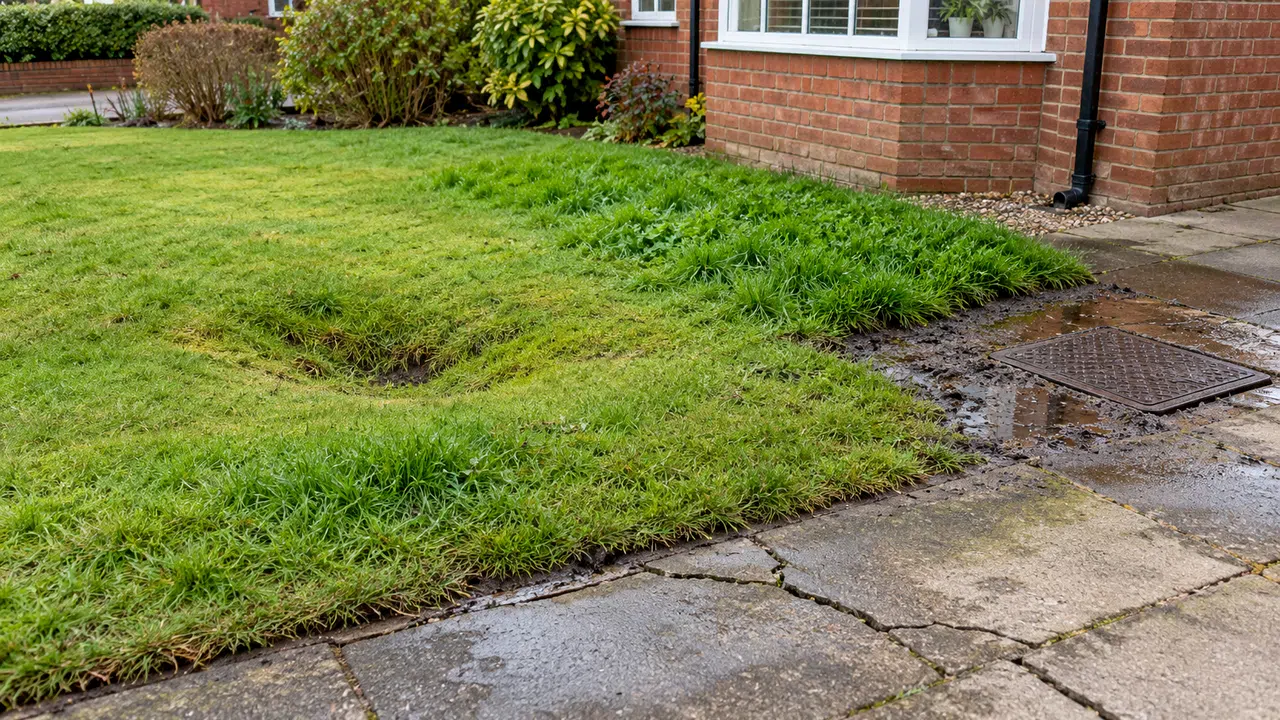
Illustrative image of the relevant drainage feature or investigation.
The short answer
Paving can settle when bedding or backfill beneath it compresses. A leaking drain might contribute by washing out fine material, but poor compaction, previous excavation and ground movement are also common explanations.
Work out where the water originates
Surface flooding, wastewater surcharge, groundwater and ordinary rainwater runoff can look similar at first. The timing, smell, affected fittings and position relative to gullies or chambers help distinguish them. The right remedy depends on identifying the source.
What matters in this situation
Check whether the dip follows the precise pipe route, whether it is still changing and whether there are drain blockages or wet ground nearby. A sunken patio does not, by itself, prove that the pipe below is leaking.
What may be happening below the paving
A dip following the line of a buried drain may be caused by poorly compacted backfill from an earlier excavation, movement of the pipe bedding or loss of soil through a broken joint. Patio slabs can also settle independently because of inadequate sub-base, water runoff or tree-root activity. The fact that a depression happens to be near a drain is a clue, not proof that the pipe is leaking.
Investigate the pipe and the paving separately
Note how quickly the depression appeared, whether it deepens after rain and whether cracks or smells are present. A drainage survey can check the pipe’s internal condition; a simple inspection of the paving construction may reveal a separate defect. If the ground is soft, a void seems to be growing or wastewater is visible, restrict access to the area and seek specialist advice. Do not simply raise the slabs and conceal a suspected active loss of support.
What a permanent remedy involves
If the drain is defective, repair it and confirm the result before rebuilding the paving. The excavation may need proper bedding and carefully compacted reinstatement to avoid a repeat dip. If the pipe proves sound, the solution may instead lie in rebuilding the patio base and managing runoff. Ask for the proposed sequence, including whether photographs and a final survey will be available for future house records.
The sensible next step
Investigate the drainage if there is relevant evidence. Repairs should consider both the pipe condition and the support under the paving; simply laying fresh slabs over unstable ground can allow the dip to return.
Protect people and property first
Avoid contact with sewage and keep children and pets away from contaminated areas. Do not enter inspection chambers or lift unsafe covers. If a public sewer may be affected, tell the relevant sewerage undertaker; if buildings are at risk, seek appropriate urgent assistance.
For flooding and emergency information see GOV.UK flood information.
What a local excavation may reveal
If the paving is lifted, a contractor may find loose backfill from an old drain repair, washed-out bedding or a pipe with a broken joint. The material beneath the slabs is important: even a watertight replacement pipe can leave the patio sinking again if the trench was not compacted properly. Conversely, a completely sound drain may lie below paving that was laid on an inadequate base. Where the depression is growing, avoid parking vehicles or placing heavy equipment on the suspect area. Ask for photographs before anything is covered and for a specification describing bedding, backfill and new paving. If the defect is part of a public sewer, the undertaker may need to authorise and undertake the pipe repair even though the paving is privately owned. Agree responsibility for reinstatement before work begins.
Need a local drainage specialist?
If investigation or repairs are needed, you can use MyJobQuote to request contact from local drainage tradespeople.
Get quotes from local drainage specialists ↗