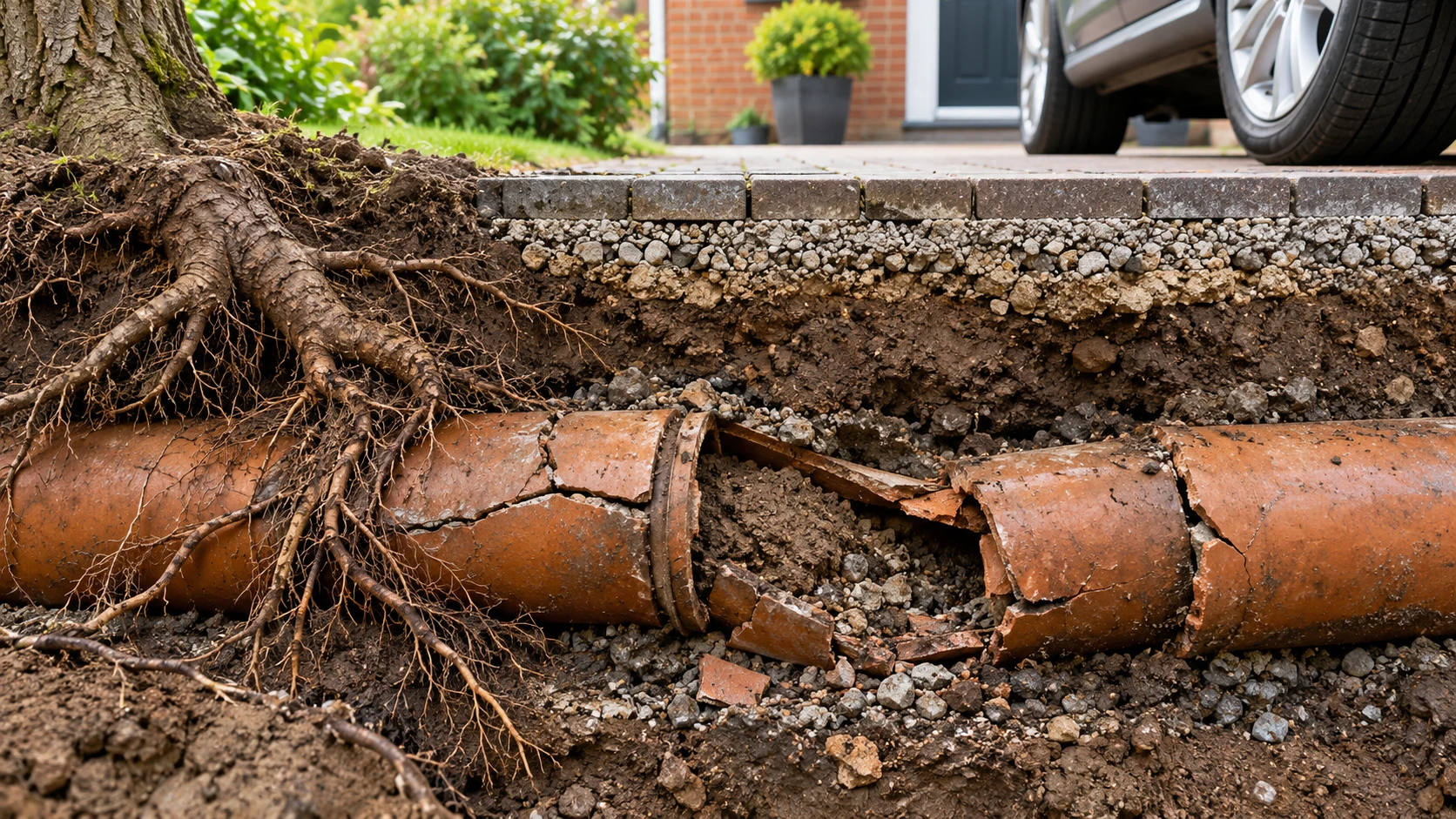
Illustrative cutaway showing one way an old underground drain can crack and collapse.
The short answer
A collapse can result from deterioration, ground movement, heavy surface loading, poor bedding or damage during nearby works. Clay pipes may crack or become displaced; modern plastic pipes can deform if installation support is inadequate.
Work out where the water originates
Surface flooding, wastewater surcharge, groundwater and ordinary rainwater runoff can look similar at first. The timing, smell, affected fittings and position relative to gullies or chambers help distinguish them. The right remedy depends on identifying the source.
What matters in this situation
A blockage or a low spot does not necessarily mean full collapse. A camera survey may show the pipe cross-section, damage and location, but standing water can conceal some details.
How an underground pipe loses its shape
Older clayware can crack or shear at a joint when the bedding moves or support is lost. Modern plastic pipes can deform if improperly bedded or subjected to loads beyond their design. Ground settlement, nearby excavation, poor backfilling, traffic loads and long-term deterioration can contribute. Root ingress may exploit existing openings and worsen damage, but roots are not evidence on their own that they caused the original fracture.
Signs that point to a structural failure
Repeated blockages at the same distance from a chamber, persistent standing water, fragments of pipe recovered during clearance or a camera that cannot pass a deformation are reasons to investigate. A collapsed pipe can also allow water to leak into the surrounding soil, although a wet patch or subsidence crack does not establish that this has happened. Ask the surveyor to locate and describe the defect rather than relying on the general label “collapsed”.
What repair should achieve
The objective is not simply to get water moving on the day. The replacement or repair must restore a reliable bore, proper jointing, adequate support and the required fall. An isolated collapse may justify a local excavation; widespread distortion may make replacement of a longer run sensible. If the defect is beneath foundations or affects a public sewer, design and permissions become especially important. Request a post-repair survey or other suitable completion evidence.
The sensible next step
The repair should address the cause and extent of failure, not only the visible opening. Ask whether the adjacent pipe bedding and connections also need attention and whether the area can be restored safely.
Protect people and property first
Avoid contact with sewage and keep children and pets away from contaminated areas. Do not enter inspection chambers or lift unsafe covers. If a public sewer may be affected, tell the relevant sewerage undertaker; if buildings are at risk, seek appropriate urgent assistance.
For flooding and emergency information see GOV.UK flood information.
One collapse can hide further defects
If a camera stops at a collapsed section, the condition of the pipe beyond it may remain unknown. A quotation to replace only the visible break should acknowledge that limitation and explain what happens if other faults are found once access is restored. Conversely, the inability to inspect downstream is not enough to conclude that the whole run must be replaced. Ask the contractor to locate the blockage accurately and explain whether it can be approached from the opposite end. The depth and proximity of buildings or other services influence excavation methods and cost. After replacement, proper bedding and testing matter as much as the new pipe material. Where a collapse has undermined the ground, the stability of surrounding surfaces should be checked before reinstatement. Document the exposed condition so later disputes are less likely.
Need a local drainage specialist?
If investigation or repairs are needed, you can use MyJobQuote to request contact from local drainage tradespeople.
Get quotes from local drainage specialists ↗