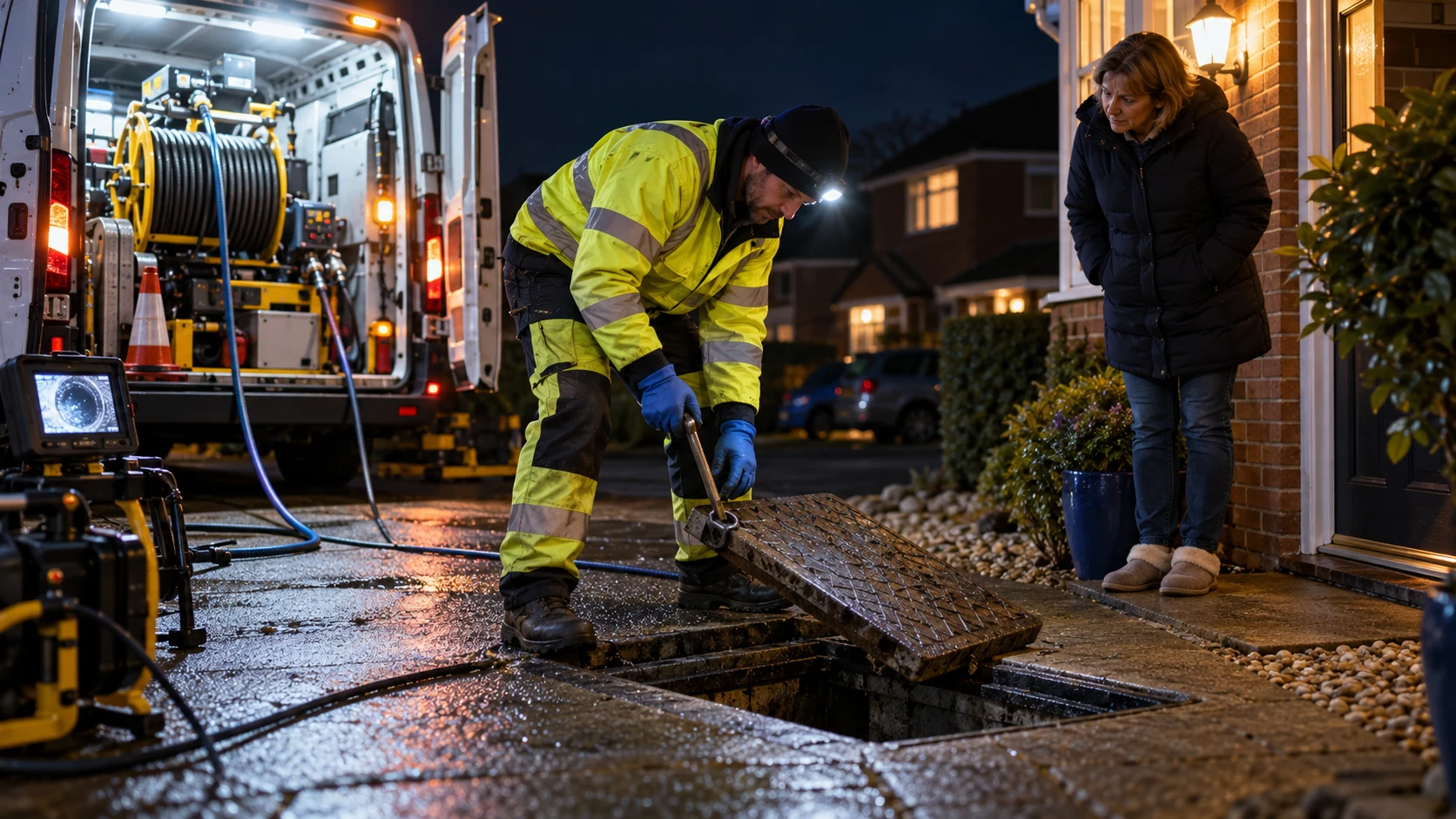
Illustrative photograph of a domestic emergency drain callout at a house.
The short answer
An emergency drainage visit normally begins with assessing where wastewater is escaping, which fittings are affected and whether the obstruction can be reached safely. The immediate objective is to contain the situation and restore safe flow where possible.
Work out where the water originates
Surface flooding, wastewater surcharge, groundwater and ordinary rainwater runoff can look similar at first. The timing, smell, affected fittings and position relative to gullies or chambers help distinguish them. The right remedy depends on identifying the source.
What matters in this situation
The engineer may inspect available access points and use appropriate cleaning equipment. A camera survey or permanent repair might follow, but is not automatically part of the initial visit. Clarify out-of-hours charges and any limits before work starts where circumstances allow.
First actions at the property
A responsible contractor will try to establish whether sewage is backing up indoors, whether multiple fixtures are affected and whether the problem may be on a public sewer. Tell them immediately if sewage is entering living areas, electrical equipment is at risk or a vulnerable person is affected. Stop using water fixtures that worsen the backup. Do not lift heavy manhole covers or enter confined spaces; foul drains can contain dangerous gases and contaminated water.
Finding and relieving the blockage
Where safe and appropriate, the contractor may inspect chambers, use mechanical cleaning equipment or jet the pipe to restore flow. Immediate clearance is not always a permanent fix, especially if roots, a displacement or a collapse caused the obstruction. Ask which run was cleared, how far the equipment passed and whether there was anything unusual in the waste removed. A camera inspection may follow once the water level and visibility are suitable.
Fees and follow-up
Confirm the emergency attendance charge, any out-of-hours supplement and how extra work is approved. Ask whether the visit includes a permanent repair or only temporary relief. For sewage flooding, document contamination and consider the need for professional cleaning; insurance or the undertaker may also need to be informed. The report should explain whether a follow-up survey is recommended and why. If the affected run is public, the sewerage company rather than a private quotation platform is often the correct first contact.
The sensible next step
Keep people and pets away from sewage and avoid contact with contaminated water. If a public sewer appears to be surcharging, notify the responsible sewerage company. Photograph damage when it is safe to do so.
Protect people and property first
Avoid contact with sewage and keep children and pets away from contaminated areas. Do not enter inspection chambers or lift unsafe covers. If a public sewer may be affected, tell the relevant sewerage undertaker; if buildings are at risk, seek appropriate urgent assistance.
For flooding and emergency information see GOV.UK flood information.
What to say when requesting attendance
Explain whether sewage is indoors, whether toilets can be used, whether neighbouring homes are affected and whether you can safely identify an accessible chamber. Mention any known history of root ingress, previous jetting or an earlier collapsed pipe. This helps the person taking the call decide what expertise and equipment may be needed. Ask what happens if the blockage proves to be on a public sewer, whether fees are payable if access is impossible and how additional charges are approved. Keep people away from contaminated areas and avoid making the problem worse by testing fixtures repeatedly. After the visit, the report should say whether flow was restored, which section was treated and what further evidence supports any recommended repair. An emergency service should address the immediate risk without using urgency as a reason for an unexplained large repair.
Need a local drainage specialist?
If investigation or repairs are needed, you can use MyJobQuote to request contact from local drainage tradespeople.
Get quotes from local drainage specialists ↗